
Manna Moments

⏱️3 min read
The God Who Goes Before You
“If you say in your heart, ‘These nations are greater than I; how can I dispossess them?’ 18you are not to be afraid of them; you shall remember well what the LORD your God did to Pharaoh and to all Egypt: 19the great trials which your eyes saw and the signs and the wonders, and the mighty hand and the outstretched arm by which the LORD your God brought you out. The LORD your God will do the same to all the peoples of whom you are afraid. 20Indeed, the LORD your God will send the hornet against them, until those who are left and hide themselves from you perish. 21You are not to be terrified of them, because the LORD your God is in your midst, a great and awesome God.” Deuteronomy 7:17-21
What an incredible promise these verses hold. Moses is speaking to the new generation standing on the threshold of the Promised Land. Their parents and grandparents never entered because of unbelief, and now their children are preparing to step into what was forfeited before. Yet the land they are about to inherit is occupied by nations far stronger than they are. Even so, God’s instructions were unmistakably clear: they were not to intermarry with these nations, form alliances with them, or show pity—because compromise would lure them into idolatry.
The previous generation had been enslaved by one oppressive power—Egypt. To strengthen their faith, God displayed miracle after miracle, proving that He alone is God and that no false deity could stand against Him.
Now this younger generation—everyone under twenty except Joshua and Caleb—stands before Moses as he repeats the same words he spoke four decades earlier. But this time, they aren’t confronting a single nation; they’re facing many.
Isn’t that often how God leads us? We move from faith to faith.
“For in it the righteousness of God is revealed from faith to faith, as it is written: ‘The righteous shall live by faith.’”
Romans 1:17
Two truths rise from this previously mentioned Deuteronomy passage.
First, to face the greater challenges ahead, we must remember how God delivered us before. Revelation 12:11 reminds us that we overcome “by the word of our testimony.” Our history with God fuels our courage for what’s next.
Second, God promises to “send the hornet” to drive out enemies we cannot see—those hidden threats attached to our promise. There are obstacles we don’t even know exist, but God knows exactly where they are and how to remove them.
The promise always comes wrapped with opposition, but none of it is hidden from God. While we may feel the urge to understand and control every detail, He reassures us that He is the one who goes before us. The victories of the last season are meant to anchor our faith for the season ahead.
He is for you. He desires for you to enjoy the goodness of the land He’s leading you into. And He will move ahead of you—driving out every enemy, seen and unseen. Your part is simply to stand firm and move forward in faith.
Manna Moments
⏱️3 min read
Yehovah Yireh: A Name We Thought We Knew
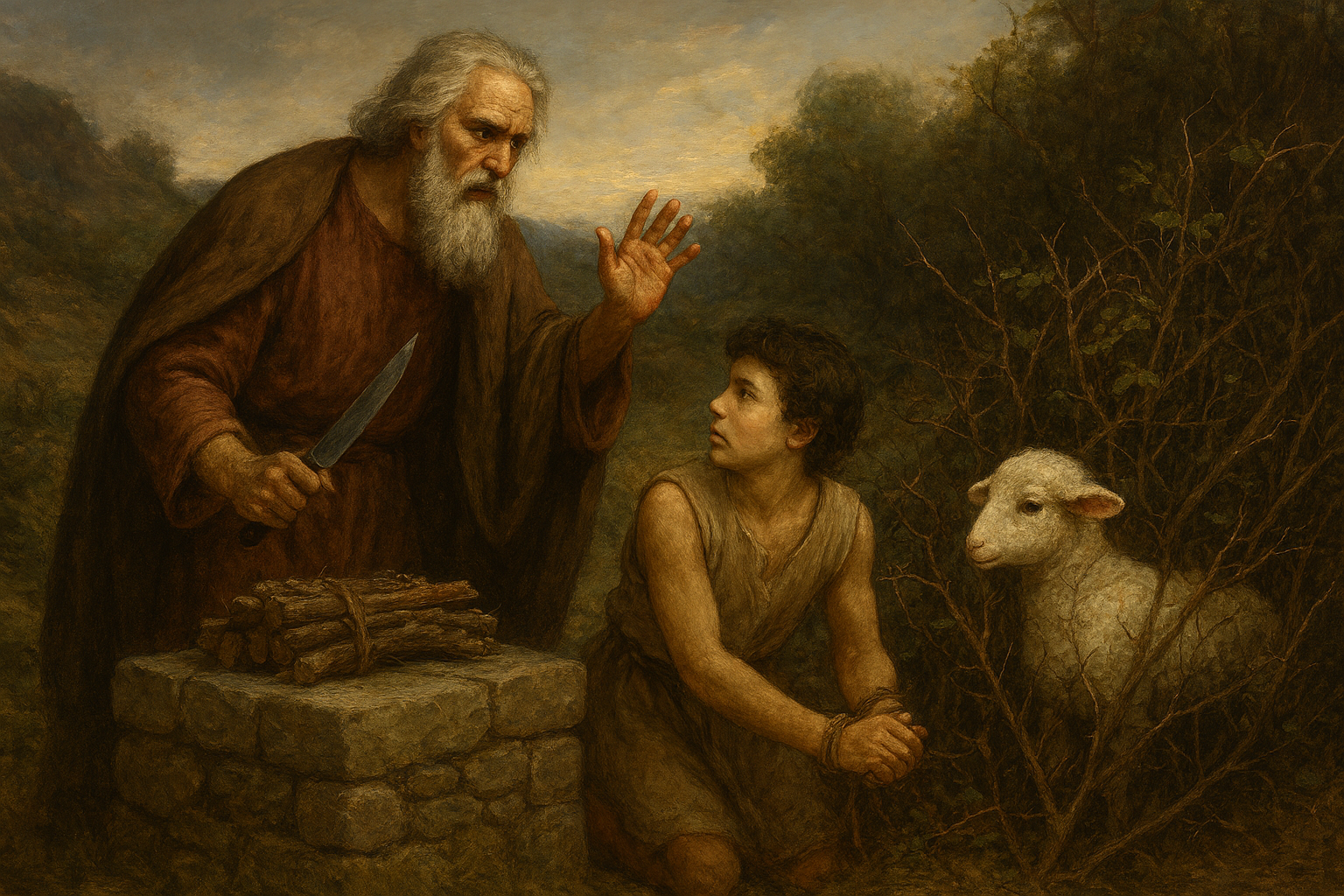
And Abraham called the name of that place Adonai-yireh; as it is said to this day: 'In the mount of the Lord, he will be seen.' Genesis 22:14
Yehovah Yireh—often rendered in English as Jehovah Jireh—is one of the most familiar names of God. We’ve heard it proclaimed in sermons, spoken it as encouragement, and sung it in worship. Yet familiarity can sometimes obscure meaning. Have we truly understood what this name reveals about God?
Most English translations interpret yireh as “provide,” but the Hebrew text does not use a verb meaning “to provide” or “to give.” Instead, it comes from the Hebrew root ra’ah, which means “to see.” Hebrew has several words that explicitly convey the idea of providing, yet the author intentionally chooses a word centered on sight. This raises an important question: What does this passage actually mean?
In Genesis 22, the phrase Adonai-yireh is more accurately translated “The Lord sees.” The second half of the verse can be rendered, “On the mount of the Lord, He will be seen.” Some Hebrew manuscripts even use ra’ah as a noun, giving the sense, “On the mount of the Lord, there is sight.” In every case, the spiritual implication is far deeper than the simplified idea of “God will provide.” The text invites us to consider both literal and spiritual significance.
The location itself reinforces this meaning. God directs Abraham to “a mount in the land of Moriah.” After God shows him the place, Abraham declares, “On the mount of the Lord, He will be seen.” Later, in 2 Chronicles 3:1, we learn that this very mountain becomes the site of Solomon’s Temple—what we now call the Temple Mount. It is the place where the glory of God chose to be seen by His priests. The theme of divine sight and divine revelation is woven throughout the geography and the narrative.
So what does this mean for us today? The implications reach far beyond God meeting our immediate needs. When we ascend God’s holy mountain in worship, surrender, and communion, He is seen. This is precisely what Abraham did. He brought his worship, his obedience, his very heart to God—and in that place of surrender, God allowed him to see what had been before him all along. In God’s presence, our vision aligns with His. He enables us to perceive what we need to see in order to move forward according to His will.
Psalm 24:3–5 mirrors this invitation:
“Who may ascend into the hill of the Lord?
Or who may stand in His holy place?
He who has clean hands and a pure heart,
Who has not lifted up his soul to an idol,
Nor sworn deceitfully.
He shall receive blessing from the Lord,
And righteousness from the God of his salvation.”
In Revelation 4:1, God says to John, “Come up here, and I will show you…” The pattern is consistent: ascent leads to sight. As sons and daughters of God, we have access to His holy hill. We are invited into the place where He reveals what we could not see on our own.
May our prayer reflect Abraham’s revelation:
Lord, open our eyes. Help us perceive You and the provision required for the path ahead.
Manna Moments
⏱️3-4 min read
The Quiet Danger of Contempt
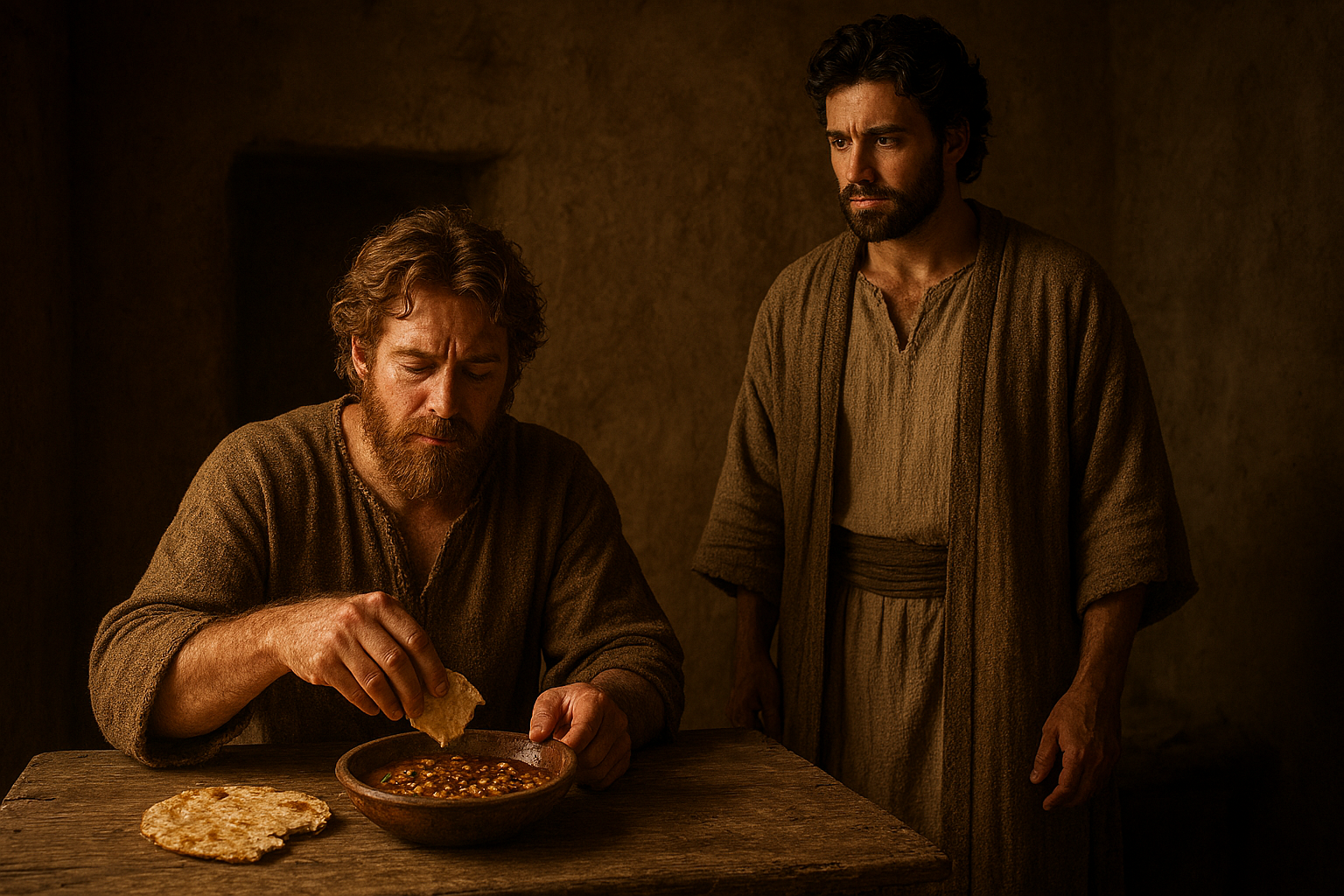
“Then Jacob gave Esau bread and lentil stew; and he ate and drank, and got up and went on his way. So Esau despised his birthright.” Genesis 25:34
“Despise.”
It’s a jarring word, isn’t it? Why would Esau look with such disdain on the extraordinary privilege he held as the firstborn? He stood to receive a double portion of the inheritance and step into the honored role of family leader. What could make someone treat such a gift with contempt?
To understand this, we have to look at the Hebrew meaning of the word used in this verse. Scripture uses several terms for “despise,” but in this passage the word is bazah—a word that describes an inner posture of the heart. According to the BDB dictionary, it means to consider something worthless.
Esau didn’t hate his birthright. He simply didn’t value it. He treated a God‑given treasure as if it were nothing—and traded it away for a bowl of lentils and bread.
We see this same word again in another familiar story:
“When the Philistine looked and saw David, he despised him because he was just a boy, ruddy and handsome.” —1 Samuel 17:42
Goliath looked at David and saw only a child. He completely underestimated what stood before him. He didn’t realize that God had been shaping David for this very moment.
So how does this speak to us today?
What gifts—what sacred treasures—has God placed in our lives that we may have overlooked? Have we grown so accustomed to His goodness that we’ve begun to treat it as ordinary? Life’s routines can dull our awareness, and over time, what once filled us with gratitude can start to feel common or even burdensome.
Zechariah 4:10 gives us another warning: “Do not despise the day of small beginnings.”
Here, the Hebrew word is buz, closely related in meaning. Again, the caution is the same—don’t treat as insignificant what God calls valuable.
Maybe you’re in a season that feels small, slow, or hidden. Maybe you’re working a job that seems beneath your qualifications. Maybe you’re in a quiet place that feels lonely or overlooked. But what if this season is God’s invitation—His gentle nudge—to draw closer, to listen, to grow?
Perspective changes everything. Gratitude reorients the heart.
Lord, help us see with renewed eyes the precious gifts You’ve placed in our lives. Teach us not to treat lightly what You call significant.
Manna Moments
⏱️3 min read
A Sacrifice of Devotion
“An outward observance without any real inward meaning is just a ceremony. A rite which has a present spiritual meaning is a symbol; if it…also points to a future reality, conveying at the same time…the blessing that is yet to appear, it is a type” (A. Edersheim, 1874).
According to Hebrews 10:1, even the sacrifices were a type and shadow that point to Christ.
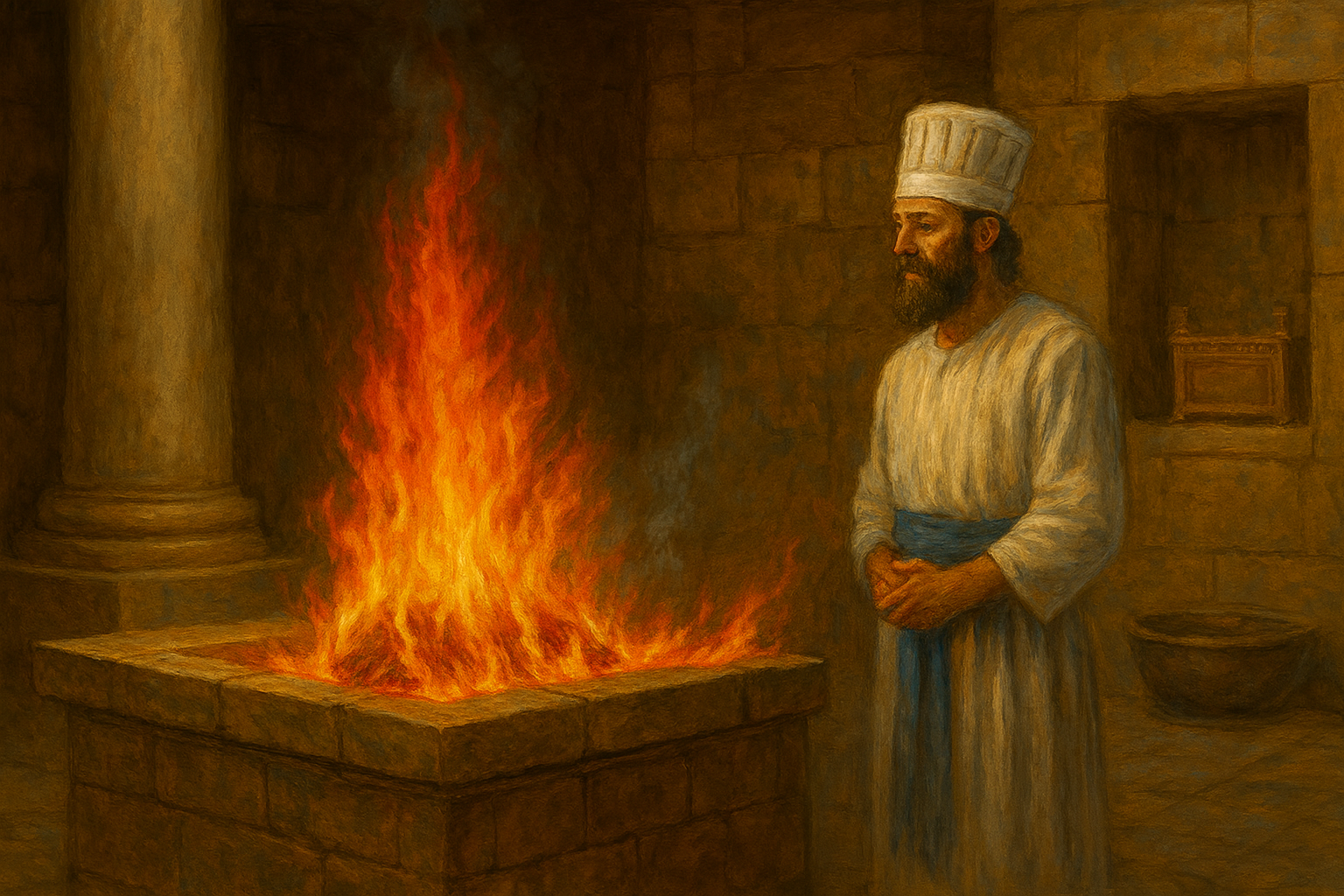
Every morning and every evening a voluntary whole burnt offering was offered to the Lord. This offering was also called “the sacrifice of devotion.” There are two Hebrew words that are used together when speaking of the whole burnt offering: “olah,” which means “to go up” or “ascend.” The second word is “kalil,” which means “whole” or “entire.” The whole sacrifice was to be offered to the Lord and burned - unlike other blood sacrifices where the priest would eat of the meat.
It’s amazing, if we think about it, how we so eagerly offer our devotion to the Lord when we are overwhelmed with feelings of gratitude and zeal - whether we are surrounded with like-minded worshippers on Sunday or stirred by sounds of praise streaming through our favorite playlists. Surely the Lord is pleased with those moments. Yet what happens when the week presses in reminding us of heavier burdens - the wayward child, the looming diagnosis, the strained marriage, the empty bank account, the ache of loneliness that may come from a newly empty nest or the single person longing for a help mate? Why do we find it so hard to lay those weights upon the altar, surrendering them fully as a sacrifice?
God wants it all! He wants the whole burnt offering, the “kalil,” - nothing held back. We are that offering of devotion that we lay down to the Lord at the beginning and ending of each day. This voluntary laying down of self includes our plans, our will, our trust, our faults, our children, our family, our jobs, our ministry - everything offered in utter devotion to the Alpha and Omega of our days. In Him is our beginning and in Him is our ending. As we place ourselves on His altar, we remember that the consuming fire of the sacrifice was not one of judgement but of acceptance as “a sweet aroma of Christ”(2 Cor.2:15). And it is in this daily surrender of devotion that He assures us: “I will meet you to speak with you” (Exodus 29:42).
Manna Moments

⏱️1-2 min read
A Call to Spiritual Readiness
In Mishnah Middot 1:2, the Levites were charged with maintaining vigilance during the night watches. Their duty was to guard the gates, storerooms, and ensure that nothing unclean entered the Temple. If a Levite was found asleep on duty, the punishment was both severe and humiliating: his garment would be set aflame to awaken him. This act was not meant to destroy him, but to shame him publicly and remind all priests of the seriousness of their sacred responsibility.
Jesus draws upon this priestly imagery in His admonition to remain watchful:
“Behold, I am coming as a thief. Blessed is he who watches, and keeps his garments, lest he walk naked and they see his shame.” Rev.16:15
What does this mean for us today? According to Isaiah 61:10, God Himself clothes His people with “garments of salvation” and “a robe of righteousness.” Jesus is warning us to guard against anything that would defile our salvation or compromise our right standing with Him. Just as the Levites were charged to protect the Temple gates, we too must stand watch over the gates of our own temple—our body, heart and mind that has been surrendered to God.
Manna Moments

⏱️4 min read
From Seed to Harvest: The Process of a Promise
“Truly, truly, I say to you, unless a grain of wheat falls into the earth and dies, it remains alone; but if it dies, it bears much fruit.” John 12:24
Death and multiplication seem to be a pattern we see throughout Scripture, yet so difficult at times to fully grasp in our daily lives.
The Word as Seed
Jesus often compares the seed to the Word. This Word can come in many forms: through reading Scripture, a sermon, observing nature (Rom.1:20), a conversation, even a dream or vision. The Holy Spirit can speak to us through anything. It’s a promise that the Holy Spirit wants us to hide in our hearts and not let it go.
The Parable of the Sower in Matthew 13 illustrates the various kinds of soil where the seed—the Word—may fall. If you haven’t read it recently, I encourage you to do so. In this blog, however, my focus is on what happens after the Word or promise given by the Holy Spirit has been received in your heart.
From Burial to Sprouting
Later in Matthew 13, Jesus explains that the seed falling on good soil produces a harvest. While this is true, the parable doesn’t detail the journey of the seed from burial to harvest. That process, however, is described by Jesus in John 12:24:
“Most assuredly, I say to you, unless a grain of wheat falls into the ground and dies, it remains alone; but if it dies, it produces much grain.”
It’s remarkable that Jesus compares the seed to a word, because a seed marks only the beginning of a greater process.
Death of the Word
First, we must embrace the promise and secure it within our hearts—this is the seed’s ‘burial.’ Next comes a stage that resembles death, as the seed loses its original form, splitting and transforming to make room for new life as a sprout.
This part of the word’s journey—the death process—is the toughest to go through. Every promise the Holy Spirit gives us has to face it, because it’s part of God’s divine order. Have you ever had God speak a promise, and then life seems to move in the opposite direction? That’s when doubt can sneak in and keep the seed from sprouting. In those moments, we need to respond like Mary did in Luke 2:19 - “But Mary treasured all these things, pondering them in her heart.” Mary hoped* for and treasured these words spoken to her.
Jesus, the Living Example
The most powerful biblical example of this process is Jesus Himself—the Word made flesh—who died and was buried. His followers must have felt devastated, much like we do when circumstances seem to contradict God’s promises. Yet three days later He rose again, presenting the Firstfruits of a harvest to His Father.
Don’t lose heart, my friends. Keep hope alive by reminding yourself of His word, even in the darkest moments, so that the promise can come back to life and bear fruit.
*Faith is the substance of things hoped for (Heb.11:1).
Manna Moments

⏱️3.5 min read
A Den of Thieves
About eighteen years before the destruction of the First Temple, Jeremiah was sent to the people of Judah with a message of repentance. Because of God’s promise to David - that his house and kingdom would remain, and that his throne would be established forever (2 Sam.7:16), the priests and the remnant in Judah thought that the temple was invincible. The fact is, the people of Judea had turned their back on God once again.
Jeremiah 7 contains some interesting information as the prophet relays God’s message to the people of Jerusalem. We will address these points of interest one by one.
The first one is that God tells Jeremiah to stand “in the gate of the Lord’s house,” when prophets typically stood in the city gates. In fact, the people in this time had been practicing idolatry including child sacrifice as referenced in several places in the book of Jeremiah. They continued in their idolatry, yet believed that they were invincible since the temple could never be destroyed. They placed all their trust in the “Temple of the Lord”, so this seems like the appropriate place for God to relay His message.
Second, in verse 4, Jeremiah seems to chant when he says, “Do not trust in these deceptive words: “This is the temple of the Lord, the Temple of the Lord, the Temple of the Lord,” as though they were under some sort of spell. Then we read in verses 10,11:
“You stand before Me in this house, which is called by My name, and say, ‘We are delivered!’ - that you may do all these abominations? Has this house, which is called by My name, become a den of robbers in your sight? Behold, I, even I, have seen it,” declares the Lord.
In Hebrew, the phrase, “which is called by My name,” is very interesting because according to the grammar, He is not saying that He is calling it by His name, but that someone else is calling it by His name. He also accuses them of making it a “den of robbers,” which was a cave on side of a frequented path that thieves would hide out. As people would pass by, they would burst out suddenly on the unsuspecting travelers and rob them. This is what God is accusing the Judeans of making His house into. He instructs them to change their ways so that they could continue to dwell in Jerusalem and on the Temple Mount.
He then tells the people that He will do to that temple in which they trust just what he did to Shiloh, the first place of the tabernacle within the land of Israel. We know, according to the story in 1 Samuel 4:10-22, the ark of the covenant was taken by the Philistines, and Jeremiah 7:12 implies that Shiloh was destroyed.
The situation isn’t much different today. Many assume that simply attending church or serving within it guarantees salvation. Yet, just as in Jeremiah’s time, even the church itself can become an idol if we lose sight of what truly matters. At the core, it is our relationship with God and the way we love and treat others that carries eternal weight. “By this all people will know that you are My disciples: if you have love for one another.” John 13:35
Manna Moments
Clothed in White: The Testing of the Priests
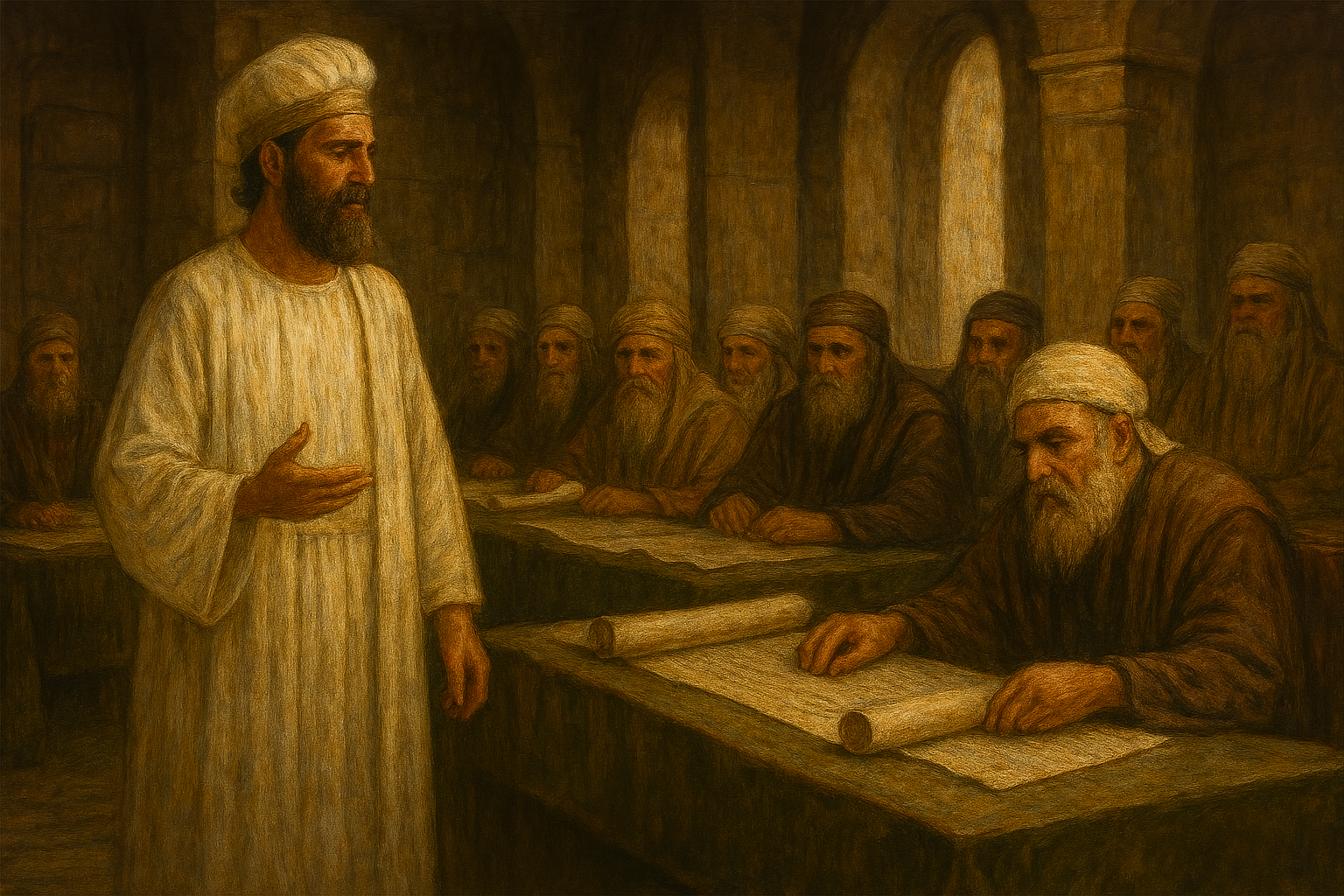
Alfred Edersheim, in The Temple: Its Ministry and Services in the Days of Christ, explains that candidates for the priesthood in Jesus’s day had to meet strict qualifications. The very first requirement was to prove their genealogy. Records kept in the archives at Zipporim were carefully examined, and if a man’s lineage could not be verified, he was clothed in black and dismissed. But if his father’s name was found, he advanced to the next stage, where the court inspected him for any physical defects. Those who passed were clothed in white, and their names were formally recorded.
This practice echoes the promise of Revelation 3:5: “He who overcomes shall be clothed in white garments, and I will not blot out his name from the Book of Life; but I will confess his name before My Father and before His angels.”