
Manna Moments
⏱️3 min read
Yehovah Yireh: A Name We Thought We Knew
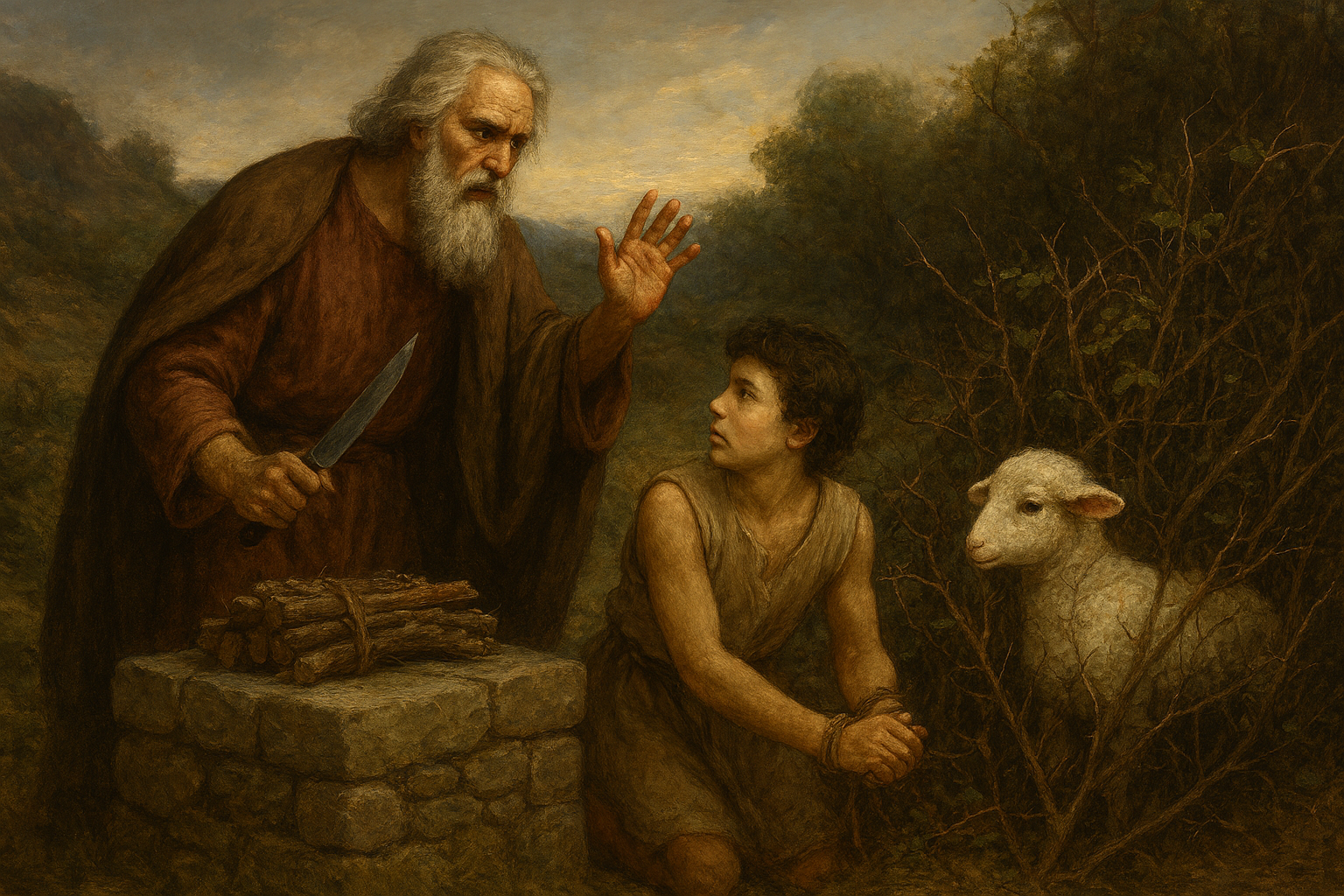
And Abraham called the name of that place Adonai-yireh; as it is said to this day: 'In the mount of the Lord, he will be seen.' Genesis 22:14
Yehovah Yireh—often rendered in English as Jehovah Jireh—is one of the most familiar names of God. We’ve heard it proclaimed in sermons, spoken it as encouragement, and sung it in worship. Yet familiarity can sometimes obscure meaning. Have we truly understood what this name reveals about God?
Most English translations interpret yireh as “provide,” but the Hebrew text does not use a verb meaning “to provide” or “to give.” Instead, it comes from the Hebrew root ra’ah, which means “to see.” Hebrew has several words that explicitly convey the idea of providing, yet the author intentionally chooses a word centered on sight. This raises an important question: What does this passage actually mean?
In Genesis 22, the phrase Adonai-yireh is more accurately translated “The Lord sees.” The second half of the verse can be rendered, “On the mount of the Lord, He will be seen.” Some Hebrew manuscripts even use ra’ah as a noun, giving the sense, “On the mount of the Lord, there is sight.” In every case, the spiritual implication is far deeper than the simplified idea of “God will provide.” The text invites us to consider both literal and spiritual significance.
The location itself reinforces this meaning. God directs Abraham to “a mount in the land of Moriah.” After God shows him the place, Abraham declares, “On the mount of the Lord, He will be seen.” Later, in 2 Chronicles 3:1, we learn that this very mountain becomes the site of Solomon’s Temple—what we now call the Temple Mount. It is the place where the glory of God chose to be seen by His priests. The theme of divine sight and divine revelation is woven throughout the geography and the narrative.
So what does this mean for us today? The implications reach far beyond God meeting our immediate needs. When we ascend God’s holy mountain in worship, surrender, and communion, He is seen. This is precisely what Abraham did. He brought his worship, his obedience, his very heart to God—and in that place of surrender, God allowed him to see what had been before him all along. In God’s presence, our vision aligns with His. He enables us to perceive what we need to see in order to move forward according to His will.
Psalm 24:3–5 mirrors this invitation:
“Who may ascend into the hill of the Lord?
Or who may stand in His holy place?
He who has clean hands and a pure heart,
Who has not lifted up his soul to an idol,
Nor sworn deceitfully.
He shall receive blessing from the Lord,
And righteousness from the God of his salvation.”
In Revelation 4:1, God says to John, “Come up here, and I will show you…” The pattern is consistent: ascent leads to sight. As sons and daughters of God, we have access to His holy hill. We are invited into the place where He reveals what we could not see on our own.
May our prayer reflect Abraham’s revelation:
Lord, open our eyes. Help us perceive You and the provision required for the path ahead.